Category Archives: Guide Blogs

Army of Virginia Withdrawal to Washington

Yesterday we marked the anniversary of the initial movements of the Union Army of the Potomac out of Washington in pursuit of Lee and the southern Army of Northern Virginia.  However, just days earlier, the battered Union Army of Virginia, commanded by Gen. John Pope, limped back behind the defenses of the capital city after their defeat at 2nd Manassas.  They would soon be merged into the newly re-organized Army of the Potomac, under the command of Gen. George McClellan.  The following post first appeared on the blog of Antietam Battlefield Guide Randy Buchman (Enfilading Lines) on Sept. 2, 2012, and gives us a glimpse into this uncertain time for the North.

Withdrawal to Washington, September 2, 1862

Dispatches from Pope to Halleck revealed a commander in total loss and near breakdown.  There was nothing to do but have the army fall back within Washington and reform.  Doubleday wrote: General McDowell, with much feeling, directed me to lead off in this movement with my division.  We were not molested, as Lee did not pursue, but rather started… for the invasion of Maryland via Leesburg.  The news of the defeat of the army produced in Washington and throughout the country the lowest of all moments; for many, perhaps, the lowest of the War.

Artillery massed in Washington

Lincoln and the members of his Cabinet had watched the affairs of recent days, had seen the rivalries and jealousies of their generals play out, and were especially distrustful of McClellan.  But Lincoln had no other military person to turn to for the task at hand; so on the morning of September 2nd, he and Stanton visited McClellan with the request that the general again take command of the Army of the Potomac.  Organization was the primary need of the hour, and such was the greatest strength of McClellan.  Of course, the Young Napoleon was more than pleased to accept, feeling both affirmed in this convictions and called upon to do no less than save the country.

By the afternoon of September 2nd, McClellan was dressed in his most splendid attire and riding out to meet the Army of Virginia units in retreat, and to take charge of the operation.  When news that Little Mac was back became known to the troops, the word spread through the columns like a wave, with cheers and spontaneous celebration.  Doubleday recorded his own meeting with McClellan: As I approached Falls Church with my division, I met General McClellan with a large retinue of staff officers—whose brilliant uniforms presented quite a contrast to our weather-stained equipments.  He received us cordially and assured us we should be protected.  The word jarred on my feelings as a soldier, for I felt that our force was even now superior to that of the enemy, and if he had done all that lay in his power to assist us, instead of doing his best to obstruct our operations, we would have entered as a conquering and not a defeated army.  Immediately after this interview, my division was directed to take post at Upton’s Hill.

Pope was essentially finished as a Civil War commander.  He was sent west to fight Indians.  McDowell, the one Corps commander trusted by Pope, and who was by his side through the entire affair, was rumored to be treasonous at worst and incompetent at best, and sent to an insignificant post in California.  The Union general faring the worst was Fitz John Porter.  He would subsequently be convicted by court-marital of disobeying orders, and thereby removed from the army.  His indiscreet pen had likely cost him as dearly as his derelictions of duty; though more than anything, he bore the brunt of anti-McClellan hostilities. Such attitudes were prevalent amongst Doubleday and his associates and staff officers.  Noyes’ written account in 1863 characteristically gave most passionate expression to these sentiments: “But if there be in all this land men with souls so mean that in this crisis of their country’s destiny they could fail to throw their whole mind, body, and spirit into our last battle, could keep back their men lest haply they might reach the field in time to change the issue of the day, or obey their orders so tardily as utterly to foil the plans of the commanding general, then may God help them in that hour when they shall see in vision the accursed treason of their act, and its fearful consequences to the country and the world. Then shall the graves of the victims of their treachery send forth each its bloody witness, while all the tears and all the agony of the widows and orphans, who owe their grief to them, shall testify against them.”

Alexander Lawton’s Brigade

the following post first appeared on the blog of our newest Antietam Battlefield Guide Kevin Pawlak (Antietam Brigades) on Aug. 21, 2012.
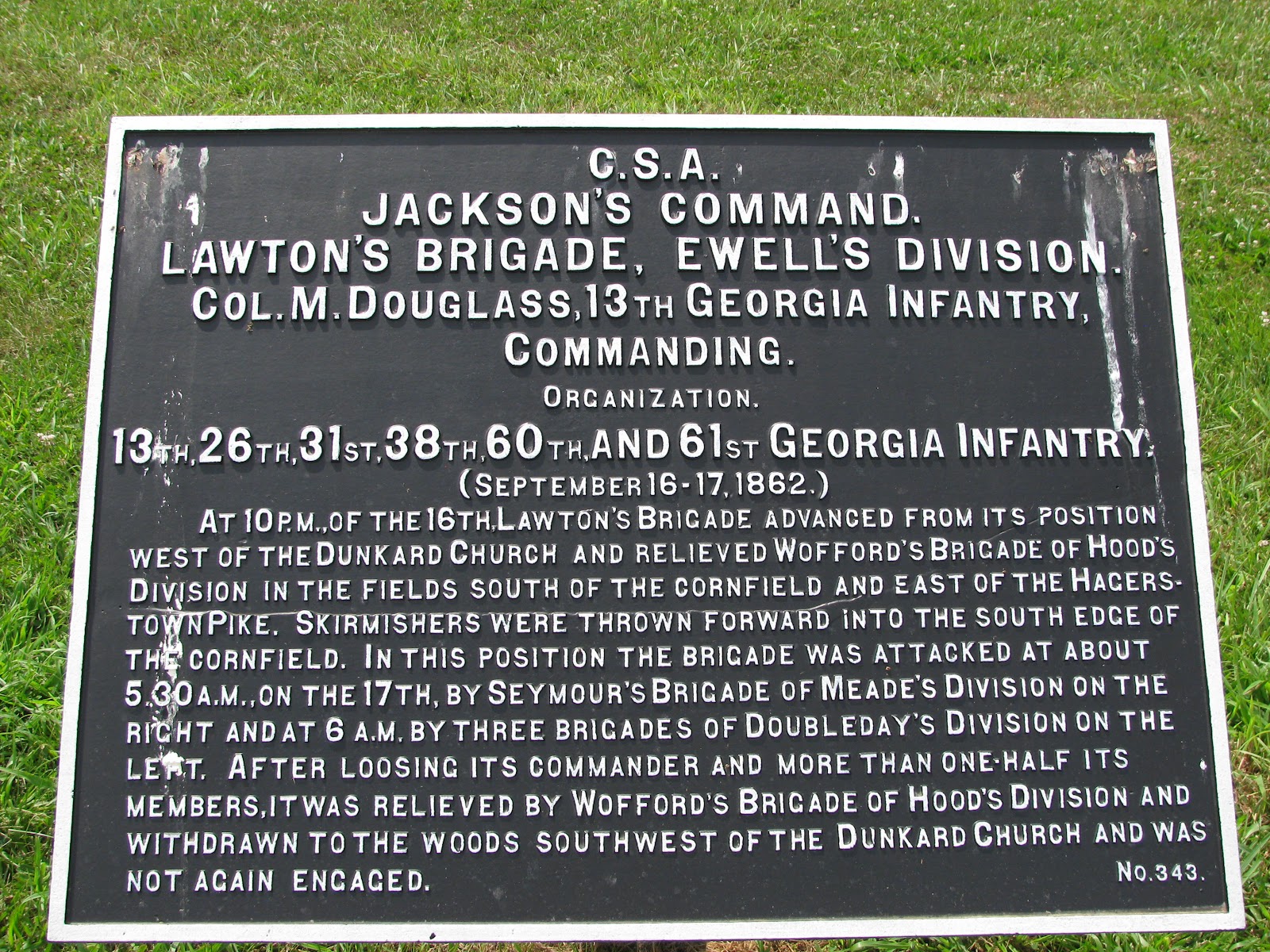
Alexander Lawton’s Brigade
Commanded by Col. Marcellus Douglass (13th Georgia Infantry)
Ewell’s Division, Jackson’s Command
13th Georgia Infantry
361 men commanded by Capt. D.A. Kidd
26th Georgia Infantry
188 men commanded by Col. Edmund N. Atkinson
31st Georgia Infantry
145 men commanded by Lieut. Col. John Terrell Crowder
38th Georgia Infantry
123 men commanded by Capt. William Henry Battey
60th Georgia Infantry
154 men commanded by Maj. Waters Burras Jones
61st Georgia Infantry
242 men commanded by Col. John Hill Lamar

Lawton’s Brigade War Department Tablet located on the south side of Cornfield Ave.

During the entirety of the Maryland Campaign, Col. Marcellus Douglass of the
13th Georgia Infantry commanded Lawton’s Brigade due to the wounding of division commander Richard Ewell at Second Manassas and Alexander Lawton’s subsequent promotion to division command.  Prior to the Maryland Campaign, the Georgians that comprised Lawton’s Brigade were hardened veterans of the Seven Days’ Battles (June 25-July 1), Cedar Mountain (August 9), and Second Manassas (August 28-30).  Lawton’s Brigade was part of Ewell’s Division of Jackson’s Command in the Army of Northern Virginia at the outset of the Maryland Campaign.  Robert E. Lee’s movement into Maryland brought Douglass’ Georgians to Frederick, MD, where they were then dispatched to clear the Shenandoah Valley of any Federal presence as outlined in Article III of Special Orders No. 191.  This Valley Expedition brought Lawton’s Division to the outskirts of Harpers Ferry, VA, where a garrison of approximately 14,000 Federal soldiers held out.  Harpers Ferry and its garrison became completely surrounded at about 11 a.m. on September 13 when Jackson’s forces, including Lawton’s Brigade, reached Halltown a few miles west of Harpers Ferry.  John Walker had forces on Loudon Heights and the divisions of Lafayette McLaws and Richard Anderson sealed Harpers Ferry from the north and northeast by occupying Maryland Heights and Pleasant Valley.  Since the show of force by the Confederate forces did not persuade the Union garrison to surrender, Jackson tried to determine if an infantry assault against the strong position of the Federals on Bolivar Heights was necessary. But after learning of the close proximity of George McClellan’s Army of the Potomac to Lee’s divided army, Jackson decided that a speedy resolution was needed to end the stalemate at Harpers Ferry.  Jackson devised a plan to do that: he would demonstrate in front of the Federals on Bolivar Heights with the Stonewall Division, commanded by John R. Jones, near the Potomac River (the Federal right flank) and with Ewell’s Division near the left of the Federal line astride the Charles Town Road (modern US 340).  While these two divisions feinted towards the enemy position, Jackson would send A.P. Hill’s Division around the Federal left and force it to capitulate early on the morning of September 15.  Lawton’s Brigade sat just south of the Charles Town Road on School House Ridge and held the Federals on Bolivar Heights in a position where they could be easily flanked.  This flanking movement, one of the most impressive during the war, forced Harpers Ferry and its garrison of more than 12,000 men to surrender early on the morning of September 15.
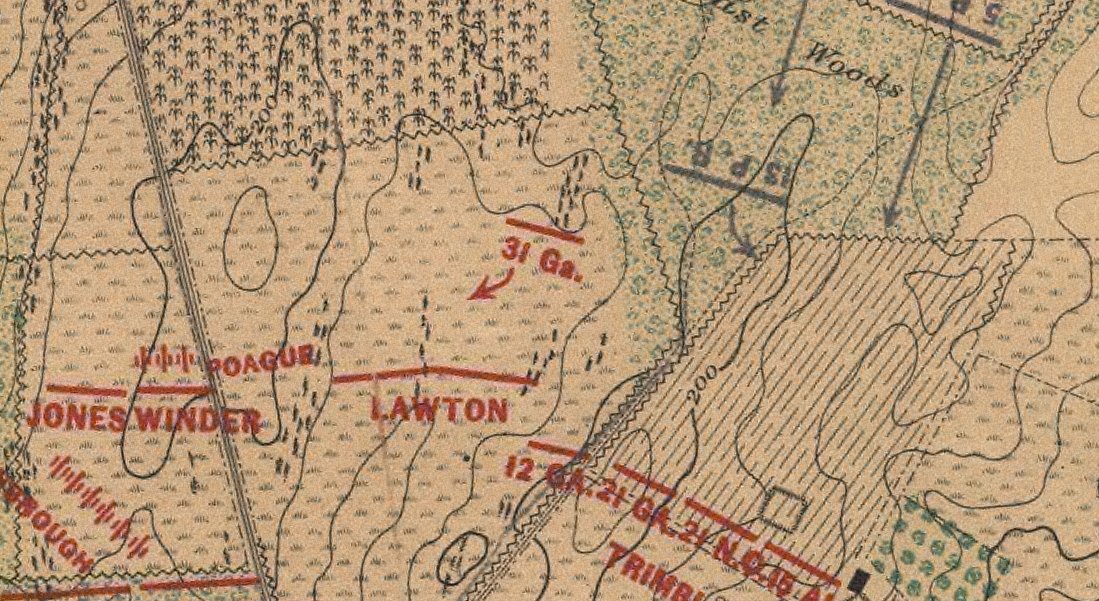
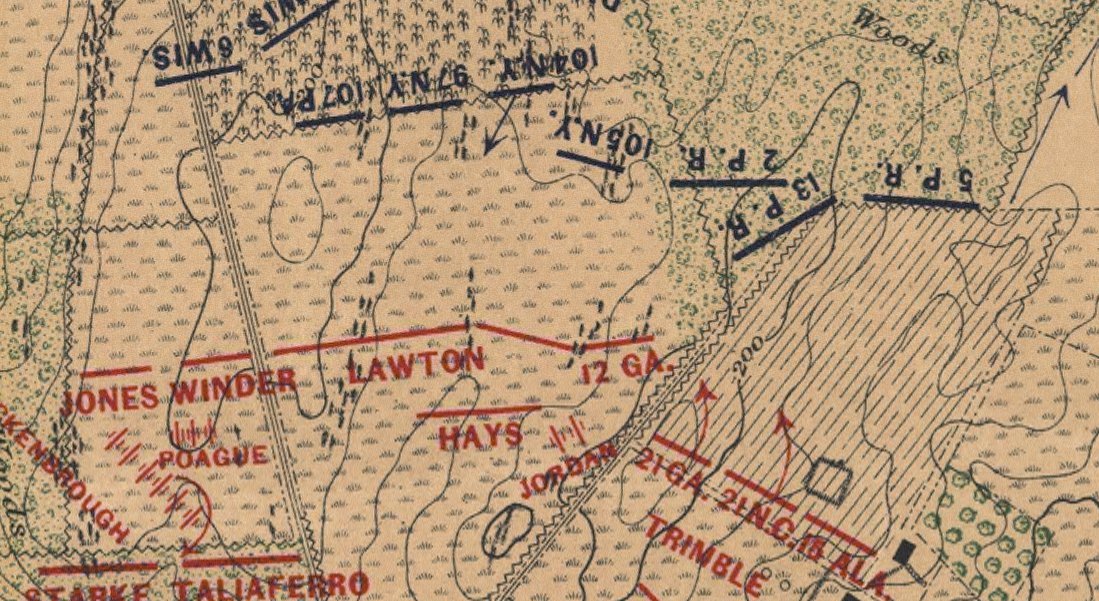
            Shortly following the capture of Harpers Ferry, Robert E. Lee called “Stonewall” Jackson and the rest of his command to reunite with the rest of the army at Sharpsburg.  Lawton’s Brigade received captured Federal rations from Harpers Ferry and began marching immediately. The brigade crossed the Potomac River at Boteler’s Ford and reached Sharpsburg around midday on September 16, where it was placed in reserve on Lee’s left around the Dunker Church.  After the sharp skirmish in the East Woods on the evening of September 16 in which John Bell Hood’s Division was involved, Lawton’s Brigade was placed in line on the east side of the Hagerstown Pike and south of D.R. Miller’s cornfield to replace the famished men of Hood’s Division.  Marcellus Douglass, commanding the brigade, sent two companies of skirmishers under Lieutenant William Henry Harrison of the 31st Georgia into the southern portion of the cornfield.  The other eight companies of the 31st Georgia, commanded by Lieutenant Colonel John T. Crowder, “a man destitute of fear,” supported the skirmishers and were positioned about 100 yards south of the cornfield. Crowder was ordered to hold his position “as long as he had a man alive to defend it.”  The rest of Lawton’s Brigade was positioned 135 yards south of Crowder’s men.  The left of Lawton’s Brigade consisted of the 61st, 38th, and 26th Georgia facing north while the 60th and 13th Georgia, forming the right of the line, were refused slightly and generally faced northeast.  The brigade “was stretched out in a very thin line, with wide intervals between the regiments, so as to occupy as much space as possible.”  Lawton’s Brigade waited in these positions while lying on their arms, piling fence rails and rocks for cover for the battle that they knew would come the next morning.

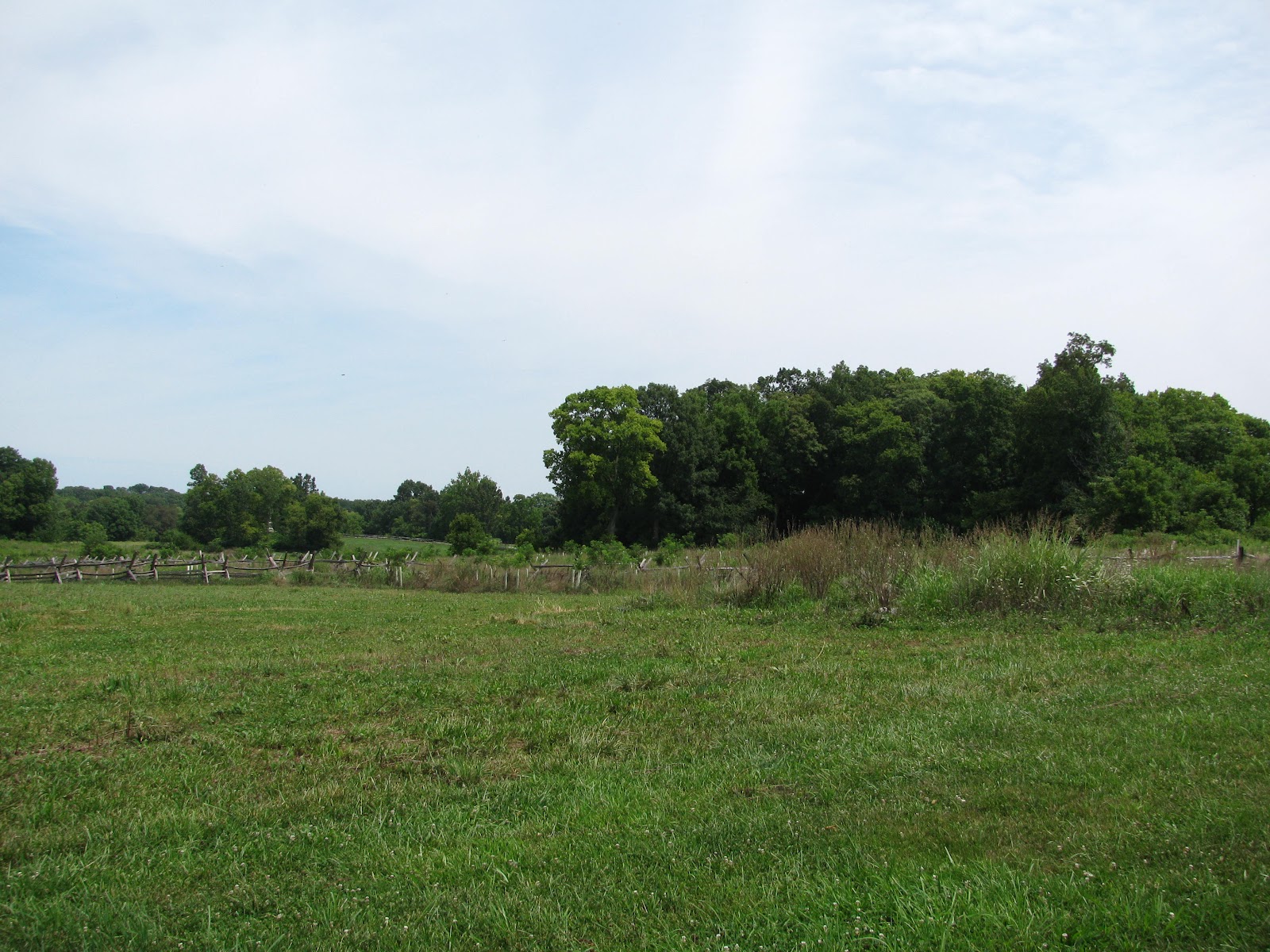
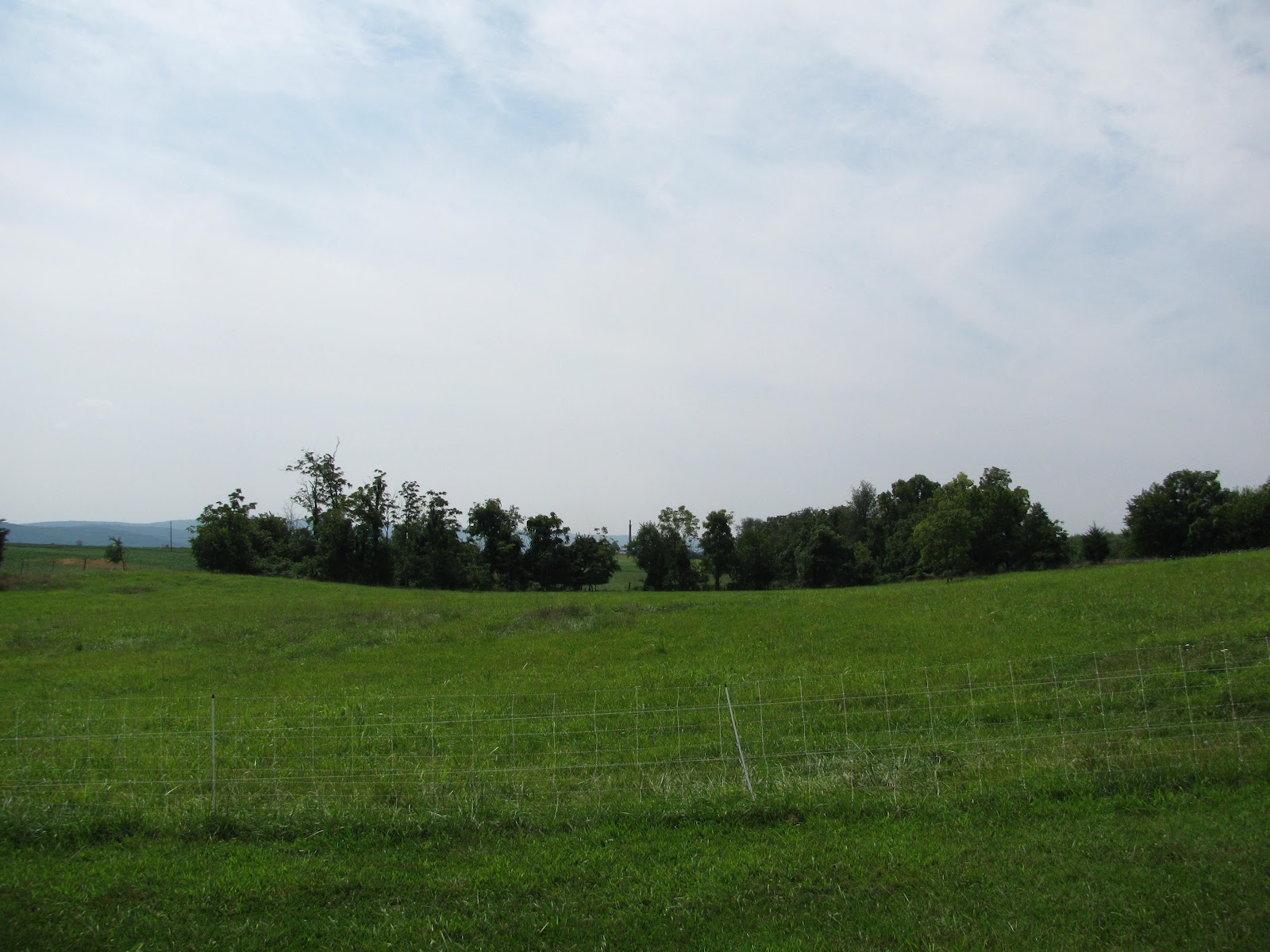
Lawton’s Brigade stood in line about where this modern treeline sits south of Cornfield Ave.

Approximate position of Lt. Col. Crowder’s 31st Georgia. This view is taken from Cornfield Ave. looking northeast towards the East Woods

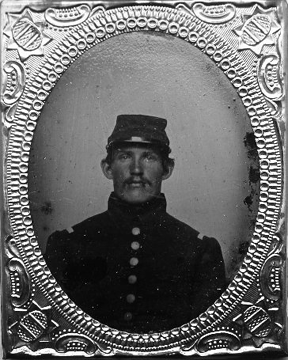
Pvt. William Barkley, Co. D 31st GA. Wounded at Antietam (civilwardata.com)

Position of Lawton’s Brigade at Daybreak, September 17

            The action started early for Douglass’ Georgians on the morning of September 17.  Harrison’s skirmishers in the cornfield ran into a line of Union pickets before daybreak and Harrison was captured while the two companies of skirmishers were forced to withdraw out of the cornfield.  Exchanges between pickets had been going on all morning but the Battle of Antietam began in earnest at daybreak of September 17, with Lawton’s Brigade bearing most of the first Federal assault against the Confederate left.  A brigade of Pennsylvanians under Truman Seymour advanced out of the East Woods and drove back the eight companies of the 31st Georgia by striking the front and right of the Georgians.  Lieutenant Colonel Crowder was wounded in the first action on September 17.  Then, Isaac Bradwell, a private in the 31st Georgia, wrote what happened after the 31st reformed on the right of the brigade and as the Federals of Duryee’s Brigade began to advance towards them:
Then a grand sight met their eyes.  The number of regimental standards floating in themorning air indicated the immense numbers of the advancing enemy. It was a wonderful sight. . . . Colonel Douglass, fearing the result of an attack by so large a force on his weak brigade, ran from regiment to regiment exhorting the men not to fire until the enemy reached the fence and began to get over it–to shoot low and make every bullet count.
Duryee’s Brigade of Ricketts’ Division was advancing due south through Miller’s cornfield and heading straight at the rifles of Douglass’ Georgians.  The colonel told his men to fire down their “own corn row” and as Duryee’s New Yorkers and Pennsylvanians came to the southern edge of the cornfield, Douglass’ men opened fire.  For the first few minutes of action between Duryee and Douglass, which started at approximately 6 a.m., neither side sought cover and each stood in open fields, simply hammering away at each other.  Ezra Carman described this slugfest in his 1,800 page manuscript on the battle: “at first no attention was paid by either line to the rail fence in their respective fronts, but each stood and fired on the other, neither party endeavoring to advance, soon, however, the severity of the fire dictated more caution and most of the men, on both sides, laid down and sought cover.”  The left side of Duryee’s line, the 104th and 105th New York, tried to break the stalemate that had developed south of the cornfield and advanced towards the right of Douglass’ line. The 60th, 13th, and 31st Georgia regiments, from left to right respectively, waited until the enemy was within 100 yards before they opened fire.  Isaac Bradwell of the 31st Georgia noted its effects when he wrote that the volley tore “wide gaps… in the blue lines” and “the volley made them [the Federals] stagger and hesitate.”  This volley had checked the Federal advance on the right side of Douglass’ Brigade for the time being.

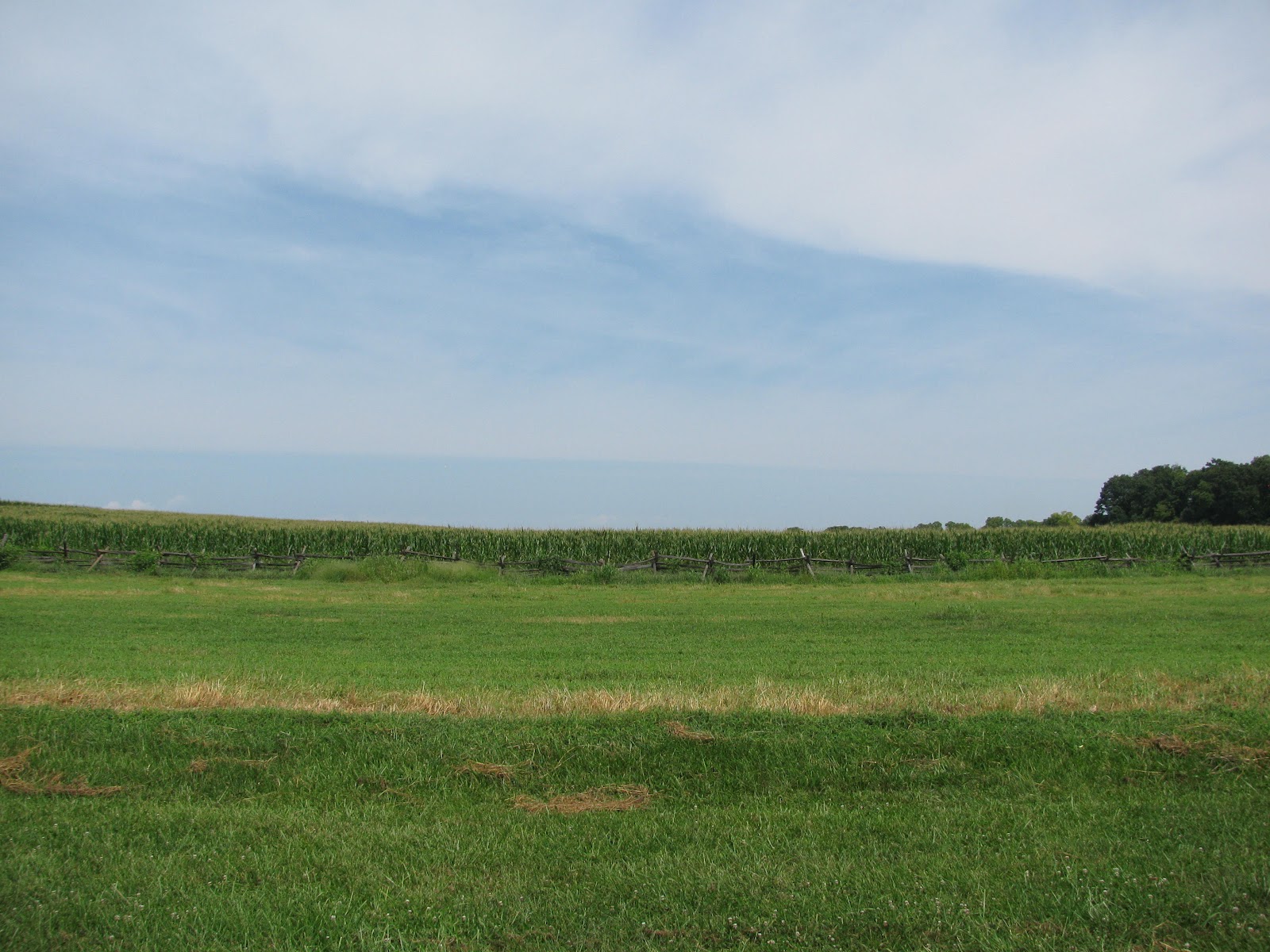
This view is similar to the one that Douglass’ Georgians would have seen early on September 17 just before Duryee’s Brigade stepped out of the corn at approximately 6 a.m.

Lawton’s Brigade at 6 a.m., September 17

            Meanwhile, on the left of Douglass’ line, the Confederates were maneuvering to break the stalemate.  The 61st Georgia, on the extreme left of the brigade, moved closer to the Hagerstown Pike in order to pour a flanking fire into the right of Duryee’s men.  After suffering heavily from a stand-up brawl with Duryee, the 38th Georgia, to the 61st’s right, advanced to utilize the cover of a rock ledge that lay in their front but were bloodily repulsed by the fire of the 97th New York and 107th Pennsylvania.  Shortly after these maneuvers by the Georgians on the left of Douglass’ line, the firefight ended as Duryee’s men began to retreat north for fear of their left flank being uncovered (this was actually a false report).  Skirmishers from Douglass’ Brigade began to follow the retreating New Yorkers and Pennsylvanians into the cornfield.
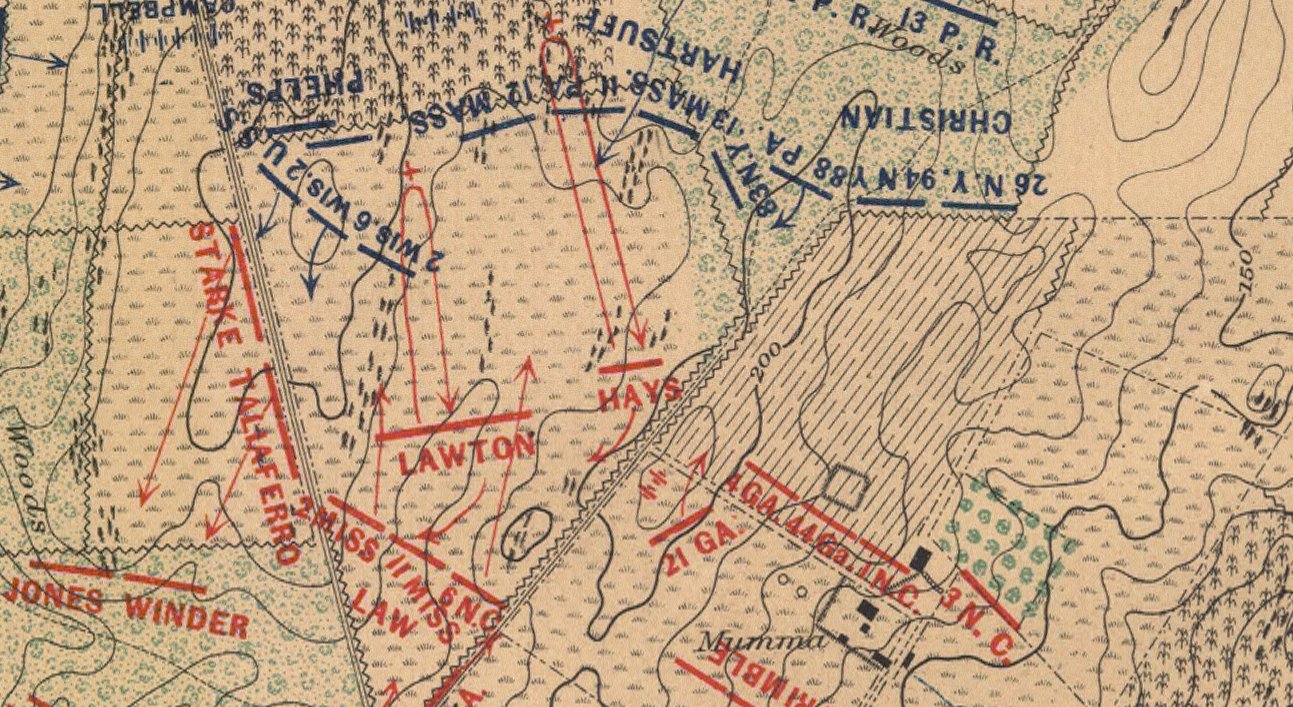
Duryee’s Brigade had lost approximately 1/3 of its men in the firefight with Douglass’ Georgians but  Lawton’s Brigade had also paid a fearful price during this action.  Its commander, Colonel Marcellus Douglass, was wounded several times by this point and his line was “very much weakened.”  Alexander Lawton, commanding the division, saw this and ordered his reserve brigade under Harry Hays to support Douglass’ left.  As it was moving to do this, Douglass directed the brigade to support his right flank.  Hays’ Louisianans moved as directed by Douglass and then began to drive north in a counterattack into the cornfield.

Counterattack of Hays’ and Lawton’s Brigades, 6:45 a.m., September 17

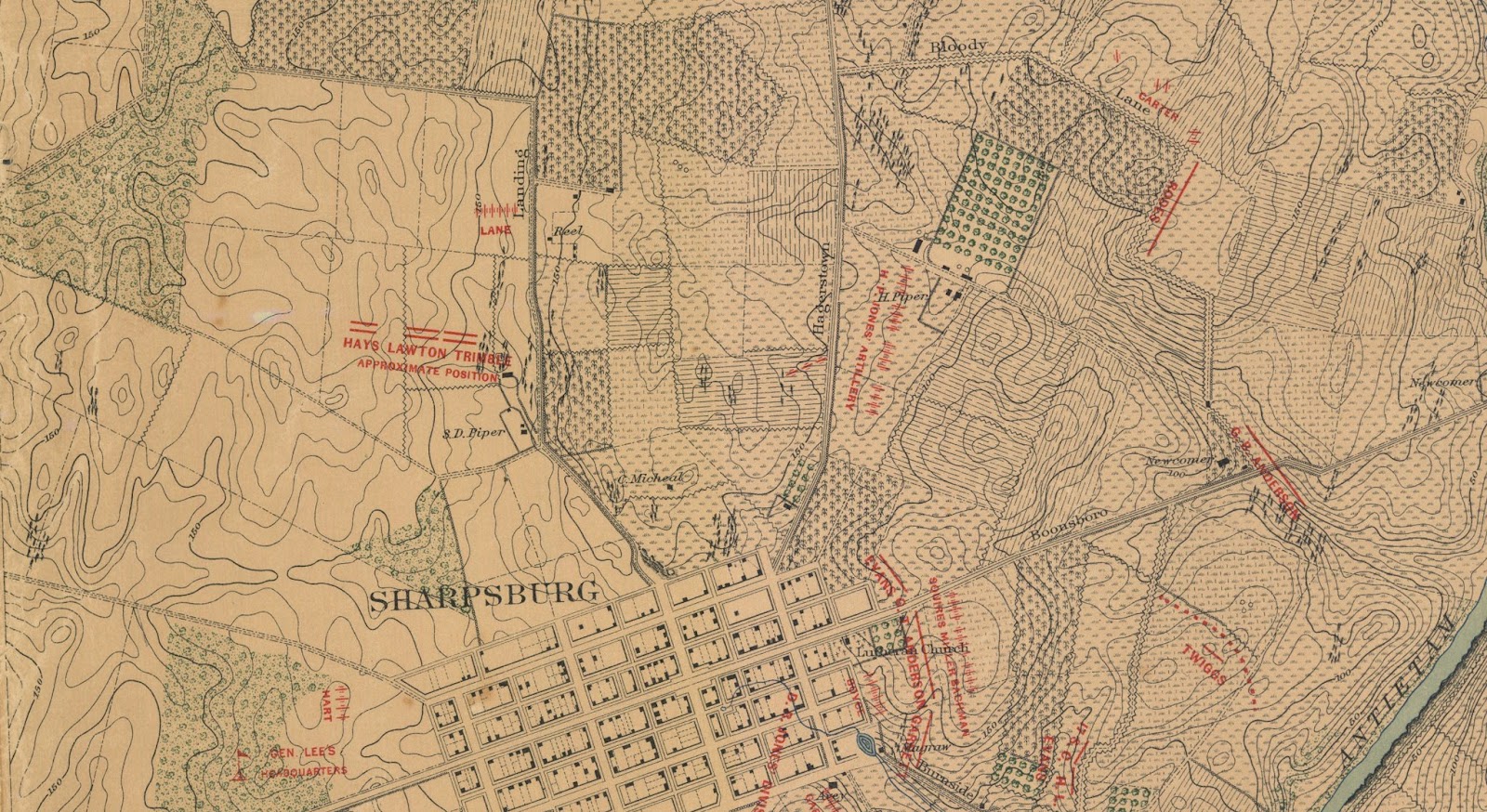
As Douglass’ skirmishers and the reinforcements under Hays began to push north towards the cornfield, the rest of Douglass’ Brigade joined in the attack.  As the Georgians advanced north, two fresh Federal brigades met them. Gibbon’s Brigade, which had just earned the sobriquet the Iron Brigade only a few days before, advanced towards Douglass’ left and Hartsuff’s Brigade towards their right.  Douglass’ men advanced under the fire of these two brigades and suffered heavily, losing most of the field officers in this charge, including every regimental commander falling either killed or wounded.  The left end of Douglass’ line was quickly driven back by Gibbon’s men near the Hagerstown Pike while the right side of the line fared slightly better; their advance was checked but the 60th, 13th, and 31st Georgia regiments held on while trading deadly blow for deadly blow with the men of Hartsuff’s Brigade.  A soldier of the 12th Massachusetts wrote of this fight that it was “the most deadly fire of the war.”  Eventually, he would prove correct as Douglass’ men could no longer hold on to their position and were forced to retreat south towards the Dunker Church at about 7:00 a.m.  During this final withdrawal, the brigade’s beloved commander, Colonel Marcellus Douglass, was struck for the eighth and final time.  Isaac Bradwell wrote of the colonel’s last moments: “He [Douglass] begs them to let him die on the battle field with his men, declaring he would rather die there than in the arms of his wife at home.”  The remnants of the brigade withdrew back to the Dunker Church and as they did, they were passed by the next two brigades to be sent into the whirlwind of death that centered around the cornfield.  These two brigades were those of William Wofford and Evander Law of John Bell Hood’s Division.  Unlike the time when Hays’ Louisianans reinforced them, the men of Lawton’s Brigade could not muster enough energy to join in the counterattack.  Indeed, by this point, the Georgians were so beat up that they could only muster “a man every ten feet or more” to stem any more Federal attacks.  Lucky for them, the Georgians would not have to fight any more on that bloody Wednesday, September 17, 1862; they remained in a reserve position just north of Sharpsburg for the rest of the day.  At sundown of September 17, Lawton’s Brigade could muster only 48 men of the 1,213 men it had carried into the battle.  However, Robert E. Lee was not done with Lawton’s Brigade yet.

Approximate position of Lawton’s Brigade after it withdrew from its position south of the Cornfield at approximately 7:00 a.m.

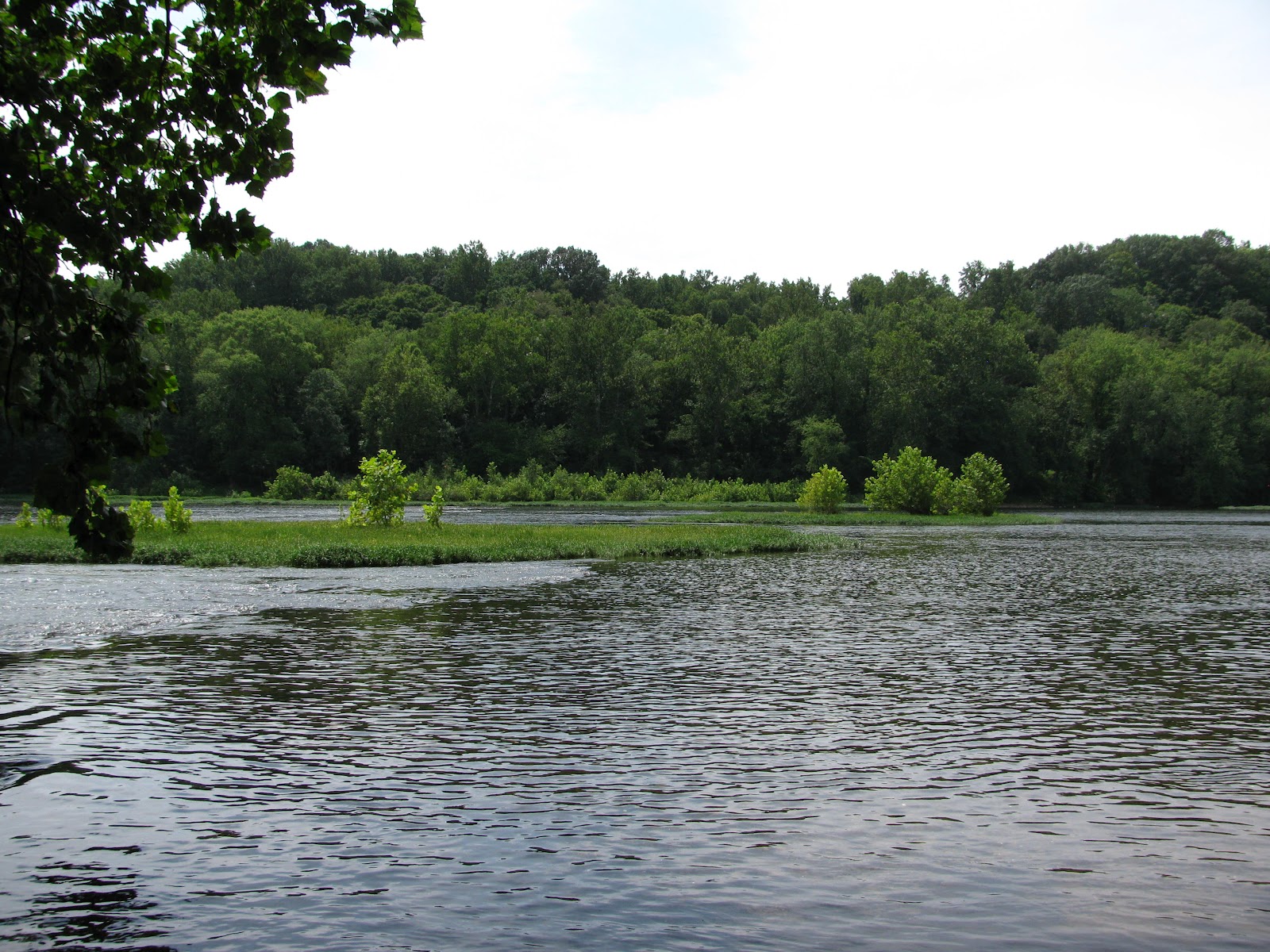
As Lee and the Army of Northern Virginia retreated from their positions east of Sharpsburg on the night of September 18 into the morning of the 19th, the men of Lawton’s Brigade, now numbering a few hundred with stragglers and those not seriously wounded rejoining the ranks, along with the Virginians of Lewis Armistead’s Brigade and 33 guns of William Pendleton’s Reserve Artillery, were ordered to guard the ford on the Potomac River that the army would use to retreat, commonly called Boteler’s or Shepherdstown Ford.  This force, numbering about 600 men total, was under the overall command of Pendleton.  He had 200 men of Lawton’s and Armistead’s Brigades spread thinly on the Virginia (now West Virginia) side of the Potomac River to protect his guns from Federal infantry while the other 400 were in a reserve position behind the artillery on the bluffs above the river.  Shortly after noon on September 19, Federal forces of Fitz John Porter’s V Corps arrived on the Maryland side of the river and began exchanging small arms and long-range artillery fire with Lee’s rearguard under Pendleton.  Running low on ammunition and suffering from increased Federal pressure, Pendleton gave orders for his command to pull back.  Just as these orders were being carried out, the 4th Michigan and the 1st United States Sharpshooters dashed across the Potomac at about dusk on the 19th towards the Confederate positions.  The Confederate infantrymen of Lawton’s Brigade, now commanded by Colonel John Lamar of the 61st Georgia, and Armistead’s Brigade did not put up much of a resistance to the crossing and were already retreating as the Federals began their assault.  As a result, only four Union soldiers were hit while crossing the river.  The rout of Pendleton’s force a few miles downstream of Shepherdstown prompted Lee to send A.P. Hill’s Division back to the Potomac early on the morning of September 20.  This action, that lasted two days and added 677 more names to the casualty lists of the Maryland Campaign, ended the campaign for not only Lawton’s Brigade but for both the Army of Northern Virginia and the Army of the Potomac.

Boteler’s Ford on the Potomac River. This view is from the Maryland side of the river looking across the river at the positions of Lawton’s and Armistead’s Brigade

Lawton’s Brigade was a part of some of the heaviest fighting that took place that September in western Maryland and it paid heavily for it.  Of the 1,213 men that it carried into battle on September 17, 565 (46.6%) were reported as casualties.  Of those 565 casualties, 42 of them were officers, the greatest loss being Marcellus Douglass, the brigade commander.  Douglass was viewed as a rising star in the Army of Northern Virginia and all felt his loss.  He was greatly loved by his men, mainly for his willingness to stay with them in battle despite his own hardships.  After already being wounded several times during the morning’s fight on the 17th, one soldier of the brigade wrote that “though wounded in several places and feeble from the loss of blood, he [Douglass] still rushes from regiment to regiment exhorting the men to hold their position, to shoot low, and make every cartridge count….”  Jubal Early, who took command of the division that Lawton’s Brigade served in during the battle, wrote simply, “in the death of Colonel Douglass the country sustained a serious loss.  He was talented, courageous, and devoted to his duty.”  A Georgia newspaper correspondent perhaps put it best by saying that “Col. Douglass was gaining an enviable position in the army, and had for some time been accounted a superior military man.  In his death Georgia has lost one of her bright military representatives.  He is properly called our ‘second Bartow.’”  Indeed, all of the Georgians who lost their lives during the Maryland Campaign could be seen as “second Bartow[s],” as men who sacrificed everything that they had to fight for what they believed in.
Unit
Men Present for Duty
Officers Killed
Enlisted Men Killed
Officers Wounded
Enlisted Men Wounded
Officers Missing
Enlisted Men Missing
Total
13th GA
361
5
43
9
157
2
216 (59.8%)
26th GA
188
1
5
2
47
6
61 (32.4%)
31st GA
145
6
3
39
1
4
53 (36.6%)
38th GA
123
1
17
6
46
1
71 (57.8%)
60th GA
154
12
3
45
60 (39%)
61st GA
242
2
14
8
73
1
6
104 (43%)
Total
1,213
9
97
31
407
2
19
565 (46.6%)

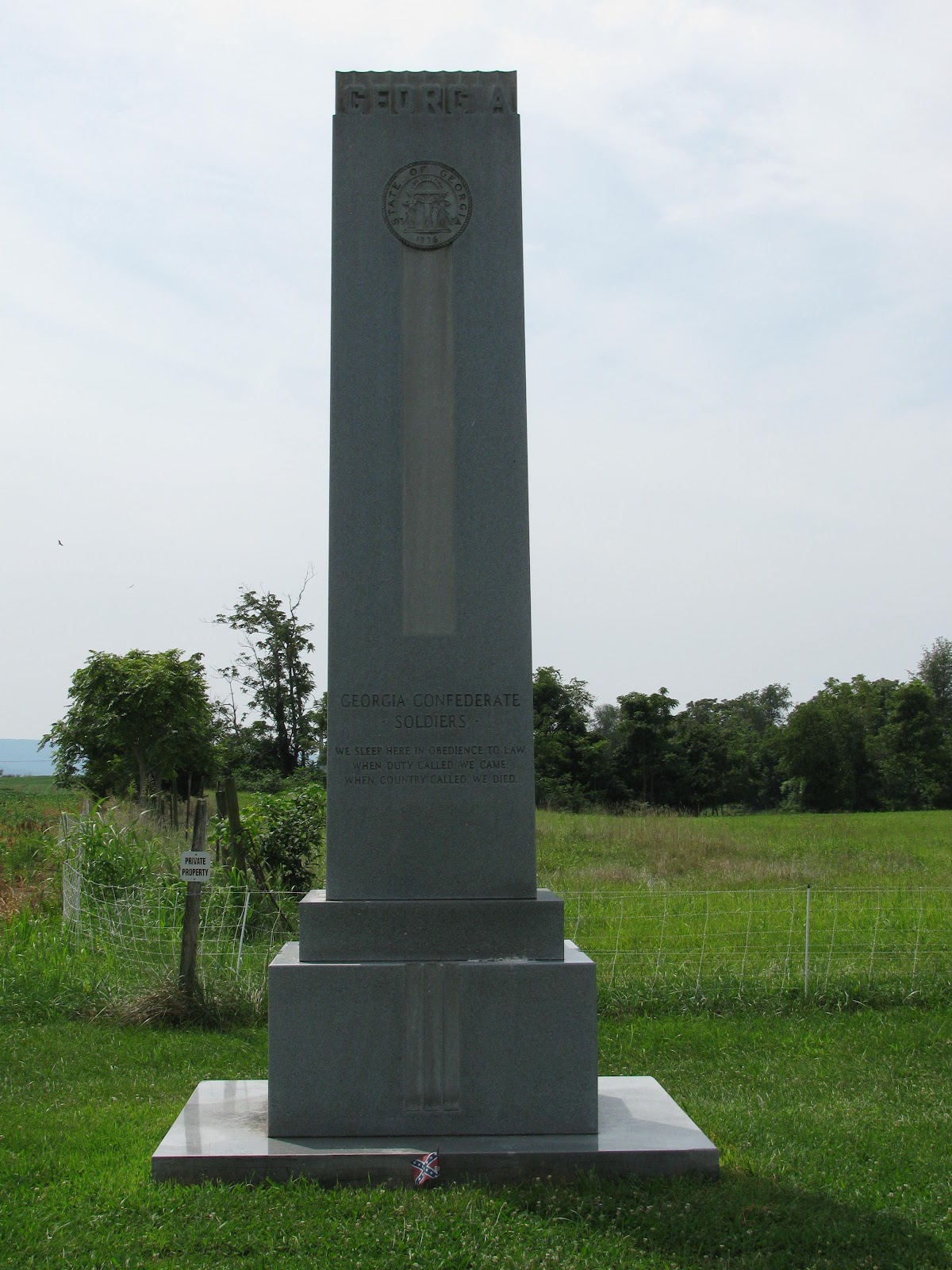
Georgia Monument south of Cornfield Ave.

Sources
Carman, Ezra.  The Maryland Campaign of 1862.
Gottfried, Bradley.  The Maps of Antietam: An Atlas of the Antietam (Sharpsburg) Campaign, including the Battle of South Mountain, September 2 – 20, 1862.
Harsh, Joseph.  Taken at the Flood.
Harsh, Joseph.  Sounding the Shallows.
Johnson, Pharris.  Under the Southern Cross: Soldier Life with Gordon Bradwell and the Army of Northern Virginia.
Official Records Volume IX
Styple, William.  Writing & Fighting From the Army of Northern Virginia: A Collection of Confederate Soldier Correspondence.

The “Lost Paragraphs” of Special Order 191

the following post first appeared on the blog of Antietam Battlefield Guide Jim Rosebrock (South From the North Woods) on Aug. 7, 2012.
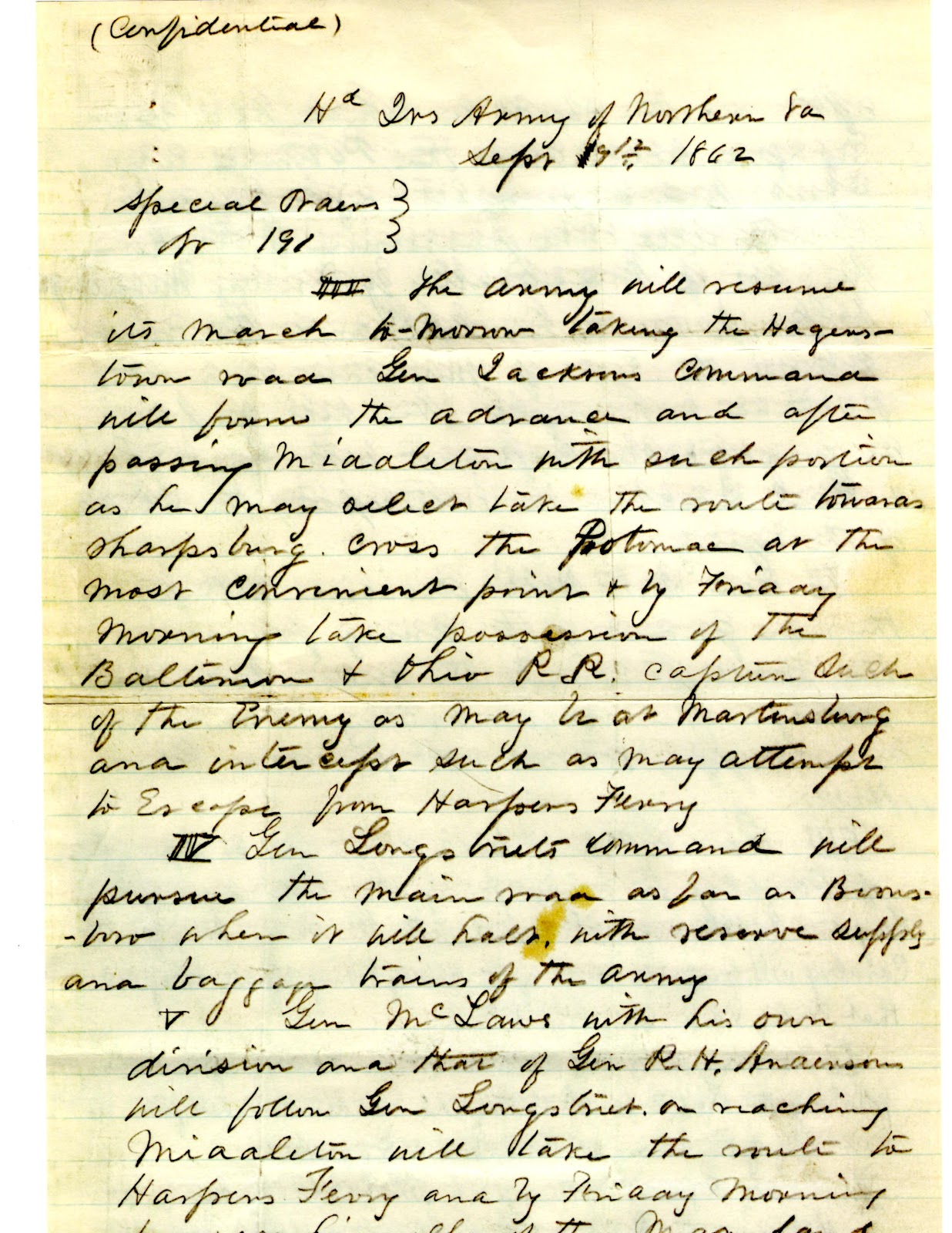
The copy of Special Order 191 that was found by Sergeant John Bloss and Corporal Barton Mitchell and put into the hands of General McClellan is now on display at Monocacy National Battlefield in Frederick.  I was privileged to attend the ribbon-cutting ceremony for the new exhibit on Friday.  On hand beside the bevy of V.I.P.s were descendents of the Bloss and Mitchell families.  They contributed a number of previously unseen letters and artifacts to the exhibit. It was exciting for me to see such an important part of history and something so key to the Maryland Campaign.  We owe a debt of thanks to everyone who made the exhibition possible.

On Sunday when I was working at the Antietam Visitor’s Center, a sharp-eyed visitor asked why the copy of the Lost Order on display begins with paragraph III.  Look closely at the order  here.  Was that a typo?  Where are the “lost” paragraphs?

 In its entirety, Special Order 191 does in fact have paragraphs I and II.  However, these paragraphs, which dealt largely with administrative matters not important for the combat commanders, were omitted from the copy written for D. H. Hill.  The copy, written out for D.H. Hill by Jackson from his original, also does not contain these paragraphs.  Here are the “lost” paragraphs:

I.   The citizens of Fredericktown being unwilling while overrun by members of this army, to open their stores, to give them confidence, and to secure to officers and men purchasing supplies for benefit of this command, all officers and men of this army are strictly prohibited from visiting Fredericktown except on business, in which cases they will bear evidence of this in writing from division commanders. The provost marshal in Fredericktown will see that his guard rigidly enforces this order.

II.  Major  Taylor will proceed to Leesburg, Virginia and arrange for transportation of the sick and those unable to walk to Winchester, securing the transportation of the country for this purpose. The route between this and Culpepper Court-House east of the mountains being unsafe, will no longer be travelled. Those on the way to this army already across the river will move up promptly; all others will proceed to Winchester collectively and under command of officers, at which point, being the general depot of this army, its movements will be known and instructions given by commanding officer regulating further movements.